Long before Stack Overflow existed, Java developers in Taiwan were helping one another find answers to coding questions. Today, AI tools offer developers another way to seek technical help.
In the early 2000s, many technical resources were available only in English, while developers in Taiwan faced challenges specific to Chinese-language applications. Encoding problems could turn submitted text into unreadable characters.
For Koji, founder and former leader of the Taiwan Java User Group (Taiwan JUG), those challenges helped inspire a community that has continued for more than two decades.
“We started a forum in Taiwan to help solve these problems,” Koji recalled. “Stack Overflow did not exist, so we tried to answer as many questions as possible ourselves.”
Around 2000 or 2001, Koji helped write a Chinese-language book about JSP, or JavaServer Pages. That experience brought the localization issues facing Java developers into sharper focus. The forum that grew from those conversations eventually led community members to ask why they should not meet in person.
Around 2005 or 2006, Taiwan JUG began holding local gatherings where developers could discuss Java, open-source frameworks, application servers, and the challenges they encountered at work.
Growing Alongside Java
Taiwan JUG’s early years included close collaboration with Sun Microsystems Taiwan Ltd. Community members participated as speakers and contributors at Java events, education outreach, certification training, and other activities that helped grow interest in the platform.
As the group grew, its conversations reflected what Java developers were using in practice: technologies such as Struts, Hibernate, EJB, and application servers.
Haocheng Lee, the current Taiwan JUG leader, found the community through that same spirit of learning and sharing. Early in his career as a Java engineer, he regularly turned to Taiwan’s active Java forums when he encountered technical problems. He then began attending JUG events and became increasingly involved with the community and its annual conference.
When Koji moved to Japan for work in 2015, Haocheng gradually took on the leadership role.
Taiwan JUG has also developed a distinctive demographic. Many members are experienced professional engineers, including developers at financial institutions and other large organizations where Java is widely used. In recent years, more than half of annual conference attendees have had more than five years of industry experience.
From Local Meetups to JCConf Taiwan
One of the clearest signs of Taiwan JUG’s growth came when the community began thinking beyond its regular meetups.
Typical JUG events attracted around 20 to 30 people. Community members saw an opportunity to create an event that complemented official Java conferences, which often focused on Java EE and supported technologies.
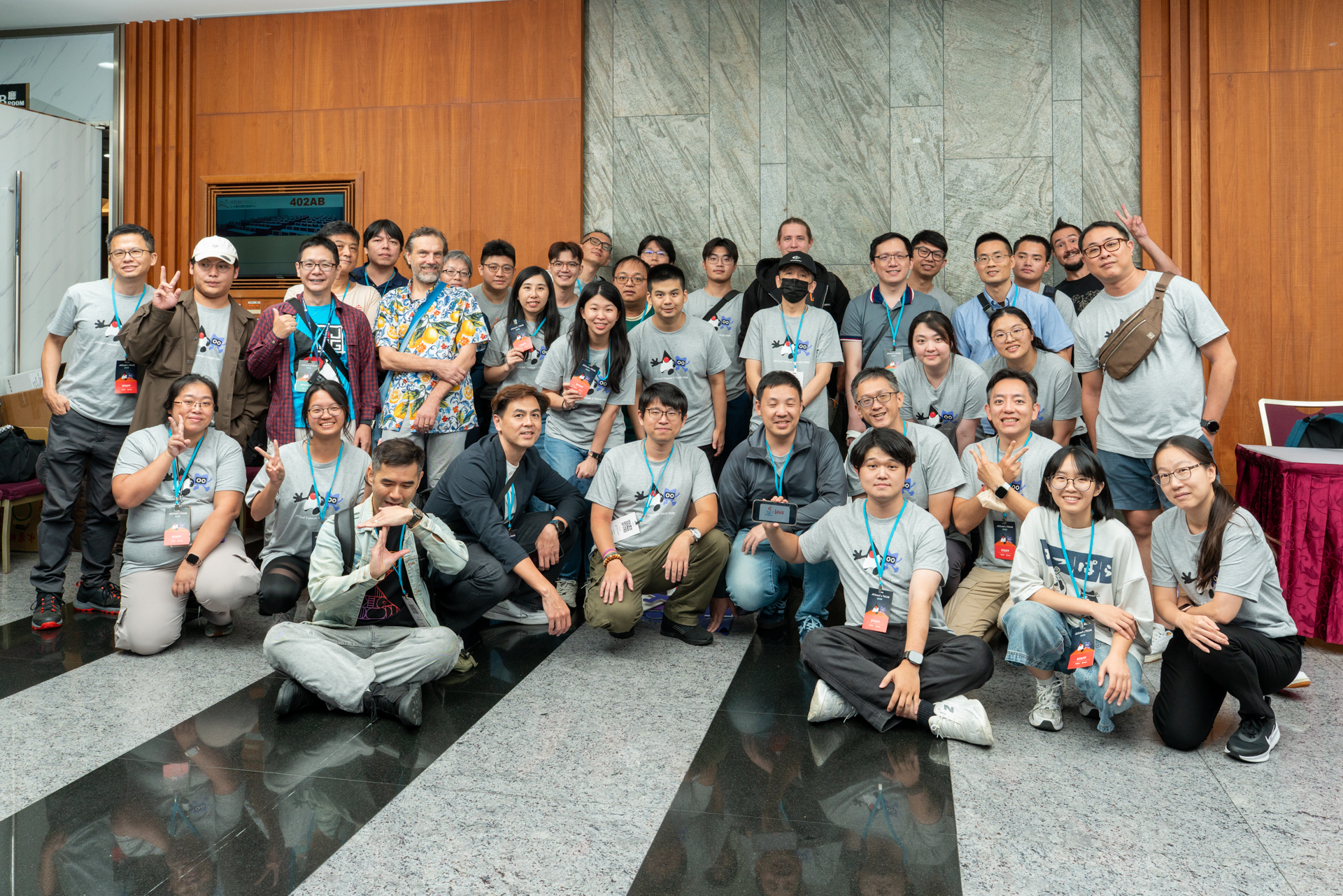
Taiwan JUG members also wanted a place to explore open-source frameworks and the wider Java ecosystem. Inspired in part by Japan Java User Group’s CCC, they began building Java Community Conference Taiwan, or JCConf Taiwan.
The difference in scale was striking: JCConf Taiwan drew around 400 or 500 attendees.
“That made us realize there was a real need for this kind of event,” Haocheng said. Java engineers wanted a place where they could learn, meet one another, and explore the latest technologies in the Java ecosystem.
Adapting to a Changing Community
The way developers find information has changed dramatically since Taiwan JUG was founded. Stack Overflow and other online resources made technical answers far easier to find. Since 2020, developers have also become more accustomed to attending events online.
Taiwan JUG has adapted by maintaining occasional JUG events while focusing much of its energy on JCConf Taiwan. The group has also begun collaborating with the Kotlin User Group, reflecting shared JVM interests and the practical need for volunteers to support an event of that size.
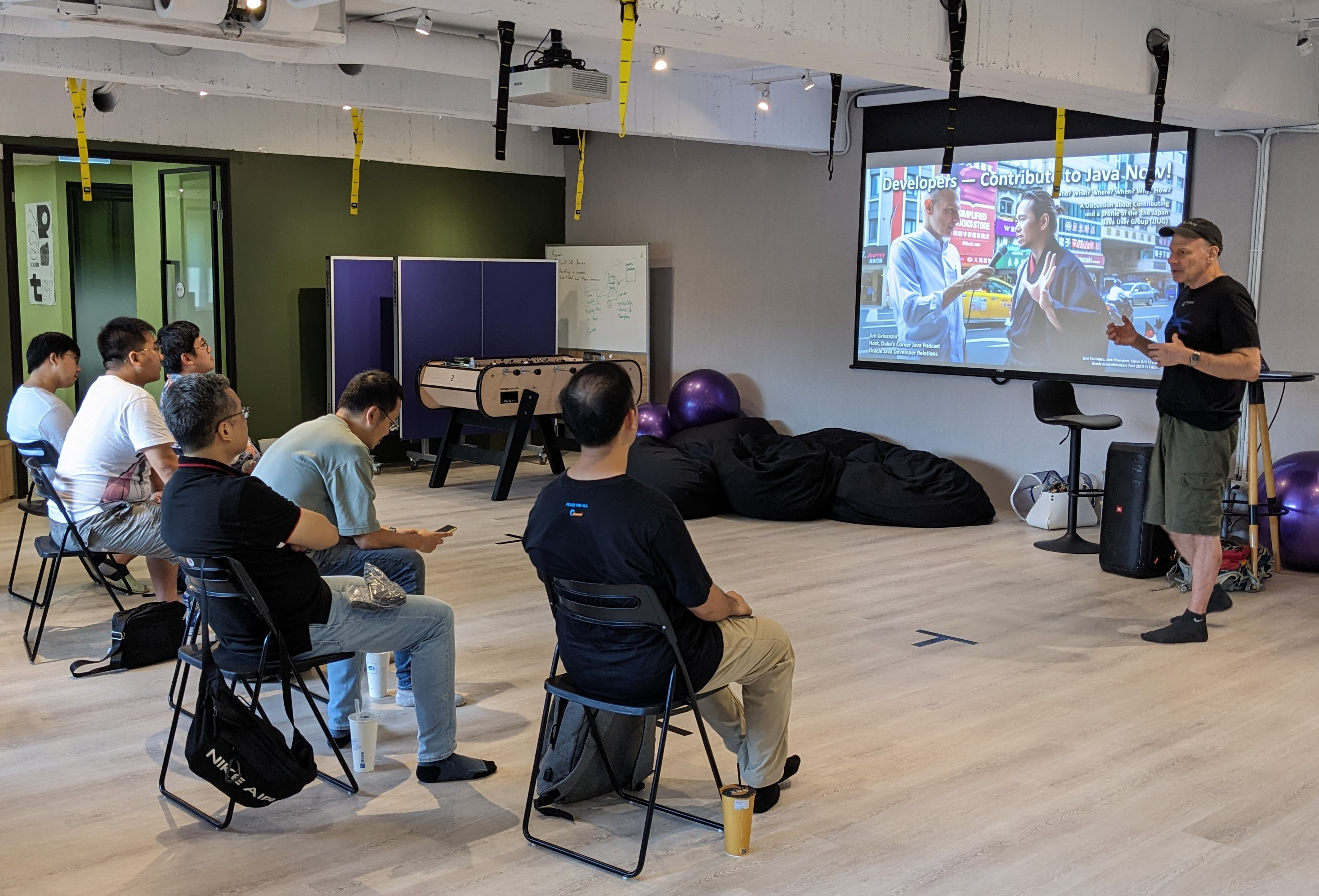
The shift reflects changing life stages as well. Many core members who were active years ago now have family and professional commitments that make frequent meetups more difficult. Yet the annual conference gives the community a consistent focal point and helps it remain active.
The group is also working to welcome more students and early-career developers as supported by the Java in Education Initiative. At each conference, students and recent graduate volunteers are among the most active participants. In one recent initiative, Taiwan JUG connected a university with an Oracle MySQL specialist for a workshop, then offered 10 free conference tickets to students from that university. Nine attended.
Java and the Community Continue to Evolve
Taiwan JUG’s technical focus has evolved from solving localization problems to helping developers understand and apply new frameworks, language features, and JVM technologies.
Koji is particularly interested in virtual threads and Project Valhalla. As a backend engineer who works with Java, Kotlin, and other JVM technologies, he sees virtual threads to make concurrent backend development simpler.
For Haocheng, Java’s smaller improvements are especially meaningful for students. JShell makes it easier to experiment with Java without first setting up a project in an IDE, while simpler introductory programs reduce some of the ceremony traditionally associated with a first Java application.
Both see Java’s six-month release cycle as an important shift. Developers can preview features more easily and see regular progress in the platform, even though companies do not always upgrade quickly enough to use new features.
“More than 10 years ago, when I encouraged people to use Java, they sometimes criticized it for evolving too slowly,” Koji said. “Now, with a new release every six months, no one can say Java is not evolving quickly.”
For developers interested in becoming involved, Haocheng recommends starting simply: attend a local JUG event, meet the people there, and consider volunteering at JCConf Taiwan.
Two decades after Taiwan’s Java developers first began gathering to solve problems together, Taiwan JUG continues to adapt alongside Java itself – bringing experienced engineers, students, speakers, and volunteers together to learn, connect, and help build what comes next.
Get Involved
To learn more about Taiwan JUG and upcoming community activities, visit the TWJUG website or join the TWJUG Facebook Group. For updates about JCConf Taiwan, follow the JCConf Taiwan Facebook page or JCConf Taiwan on X.
